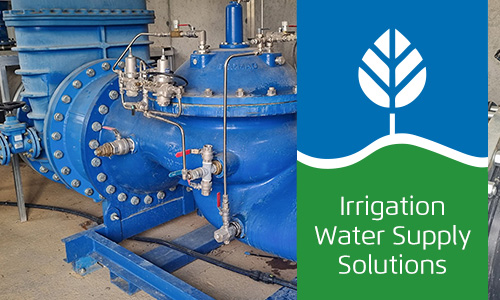


Modernising Irrigation Distribution Network in the Macalister Irrigation District, Australia

 Irrigation
 2026
2026 Australia
The Modernisation Journey of the Macalister Irrigation District
Australia’s irrigation infrastructure sector is undergoing a structural transformation. Traditionally based on extensive open channel systems, many irrigation districts are now shifting towards pressurised, pipeline-based distribution networks designed to improve water efficiency, operational control, and climate resilience.
This transition is driven by increasing water scarcity, rising operational costs, and the need to deliver water more accurately across large, diverse agricultural regions. Modern distribution networks are no longer passive conveyance systems. They function as actively managed hydraulic infrastructures where flow regulation, pressure management, air control, water metering, and remote operation and monitoring are essential for reliable performance.
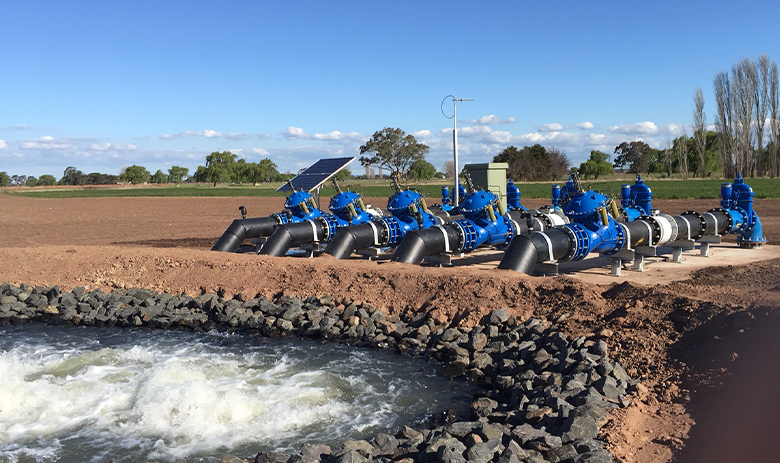
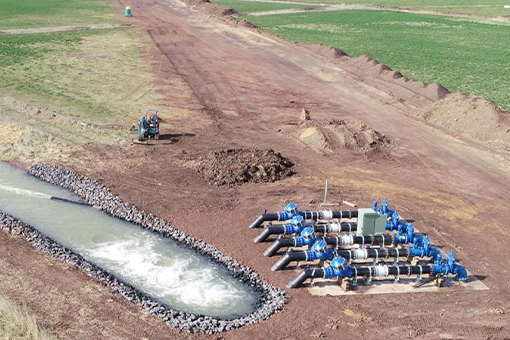
The Macalister Irrigation District in Gippsland, Victoria, is a leading example of this transformation. Operated by Southern Rural Water, it spans approximately 53,000 hectares, making it one of the largest and most productive irrigation districts in Australia and the largest south of the Great Dividing Range. Supplied mainly by Lake Glenmaggie and the Macalister River, the district has supported agriculture for over a century, driven by its combination of fertile soils, reliable water resources, and ongoing infrastructure development.
From its early phases in the 20th century, the system relied on gravity-fed channels and manual regulation. These systems were designed to cope with variable water availability, characterised by alternating droughts and floods. However, they offered limited control, required intensive manual intervention, and were inefficient.
To address these limitations, a large-scale modernisation programme was initiated in 2013 and completed in 2024.
The programme introduced extensive infrastructure upgrades, including pipeline installations, regulator improvements, and automation systems, delivering significant water savings and operational improvements across the district.
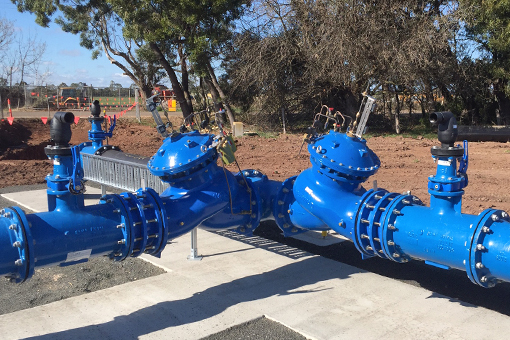
Within this broader transformation, the Maffra and Tinamba regions became key focus areas for upgrading distribution lines and transitioning from manual water delivery to controlled, automated irrigation systems.
From Manual Water Delivery to Precision-Controlled Irrigation Distribution Network
Before modernisation, water delivery relied on manually operated sliding gates, requiring direct farmer intervention to access allocated flows. This approach posed multiple operational and hydraulic challenges.
Replacing manual infrastructure with automated flow control
Manual gate operation limited the ability to regulate flow accurately and consistently across the network. Variations in operation led to uneven distribution, human error, inefficiencies, and increased dependency on operator skill and timing.
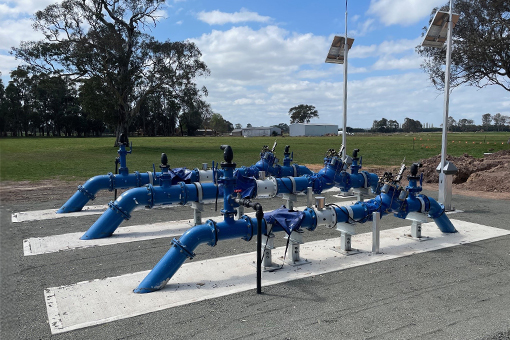
Improving delivery accuracy and responsiveness
In large irrigation districts, water must be delivered according to predefined allocations. Without consistent control, systems struggle to respond to changing demand, elevation differences, hydraulic events, and changes in operating conditions, leading to over- or under-supply.
Enabling remote operation via telemetry
The lack of remote monitoring and control requires on-site physical presence, reducing operational efficiency and limiting the ability to manage and respond to real-time changes in system conditions across geographically dispersed farms.
Minimising maintenance and environmental impact
The existing infrastructure was prone to wear, clogging, and environmental exposure. Cold winter conditions introduced frost risks that affected valve performance and reliability.
Supporting diverse agricultural applications
The region includes dairy farms using centre pivot systems alongside high-value vegetable production. Each application requires a different flow and pressure, which demands a flexible, scalable distribution solution.
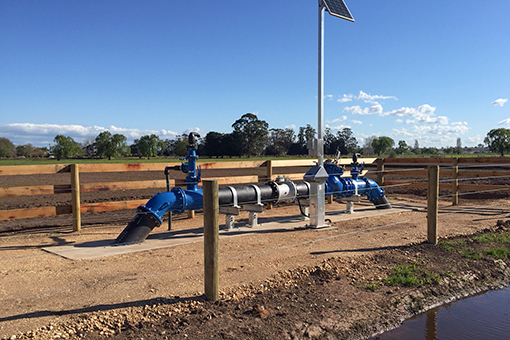
These challenges highlighted the need to transform the distribution network from manual operation to a precise, automated, and remotely managed infrastructure.
Automated Flow Control Solutions for the Distribution Lines
The solution implemented across the distribution network focused on converting the system to a fully controlled, automated hydraulic infrastructure. It integrated an advanced, real-time telemetry solution for monitoring and control. This provides real-time visibility of system performance and the ability to adjust and react to online events without visiting the site.
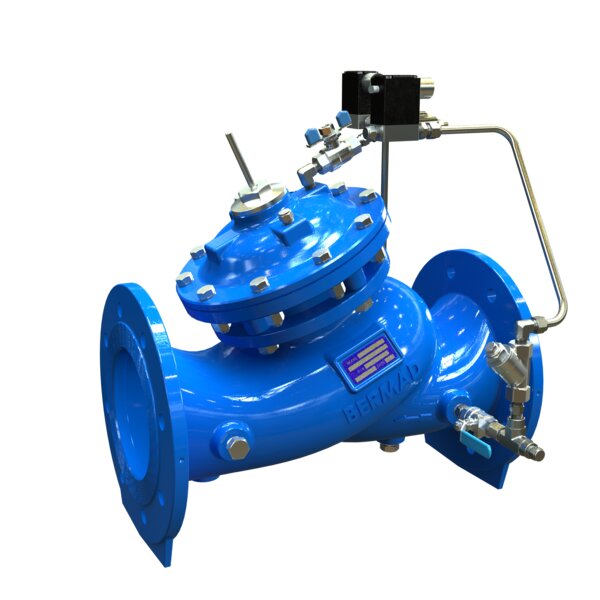
At the core of this solution are over 100 units of BERMAD 718-03 Electronic Control Valves deployed at individual outlets and key distribution points across the network. These hydraulic flow control valves, operated by solenoids, limit flow to preset values and operate automatically regardless of changes in demand or supply pressure. Each valve is integrated into the control system and operates automatically using controller signals. In response to these signals, the valve adjusts its opening position according to preset values programmed into the controller. Both opening and closing speeds are adjustable on site.
Instead of addressing individual points in isolation, the project implemented a distributed control architecture across the network:
- Real-time flow modulation across multiple delivery points
- Integration of a telemetry system for remote operation and monitoring using dedicated controllers
- Adaptation to varying hydraulic conditions, as a result of elevation differences and pressure fluctuations.
- Scalable infrastructure, allowing the system to support future growth in demand
- Electronic modulation: Continuous adjustment of flow based on control signals, using an electronically modulated control valve
- Integrated remote management: Full remote operational control and performance monitoring by dedicated controllers
- Dual large control filters: Each electronic valve control loop includes dual large control filters, reducing the risk of clogging and extending maintenance intervals, suitable for irrigation water quality
- Thermal protection: Custom thermal blankets for each flow control valve ensuring reliable operation under frost conditions
- Valve diameters: 8”, 12”, and 16”
The system was designed to operate under varying hydraulic conditions across the network:
- Static head of approximately 30 metres
- Operating pressures range from 5 to 30 metres, depending on location and elevation
- Valve sizes ranging from DN200 to DN400
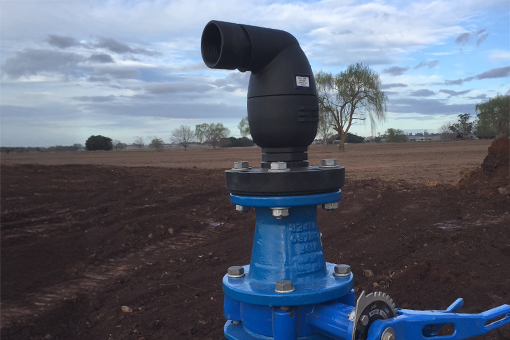
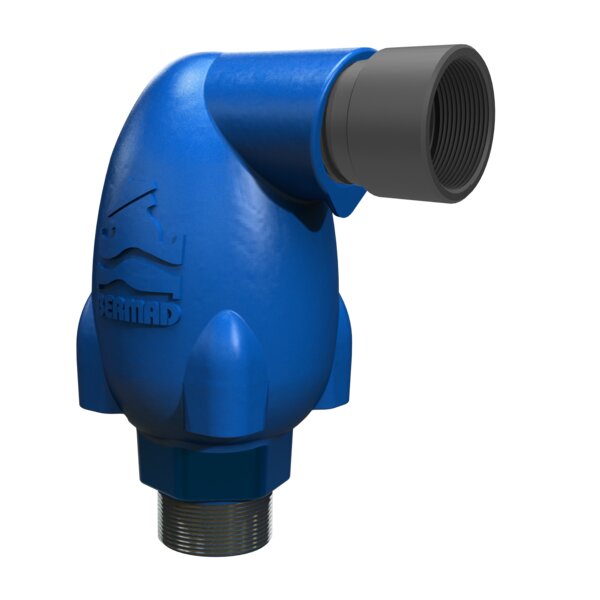
Effective air control is crucial for hydraulic systems to ensure long-term performance and efficiency. As part of the Macalister upgrade, over 300 BERMAD Air valves were installed across the network, performing these key functions:
- Air release during filling and pressurised operation
- Air intake during bursts and drainage events
- Surge protection during transient conditions
Approx. 300 units of C30 series Combination Air Valves to ensure effective air management and system protection
This project was carried out in phases and offers a practical example of how using BERMAD hydraulic and digital solutions can enhance overall system performance and reinforce irrigation infrastructure.
Implementation started in 2018 and progressed in stages, allowing for a gradual transition and scalability:
- Initial automation and valve installation
- Expansion to more than 100 outlet assemblies
- Planned future expansion with additional control points
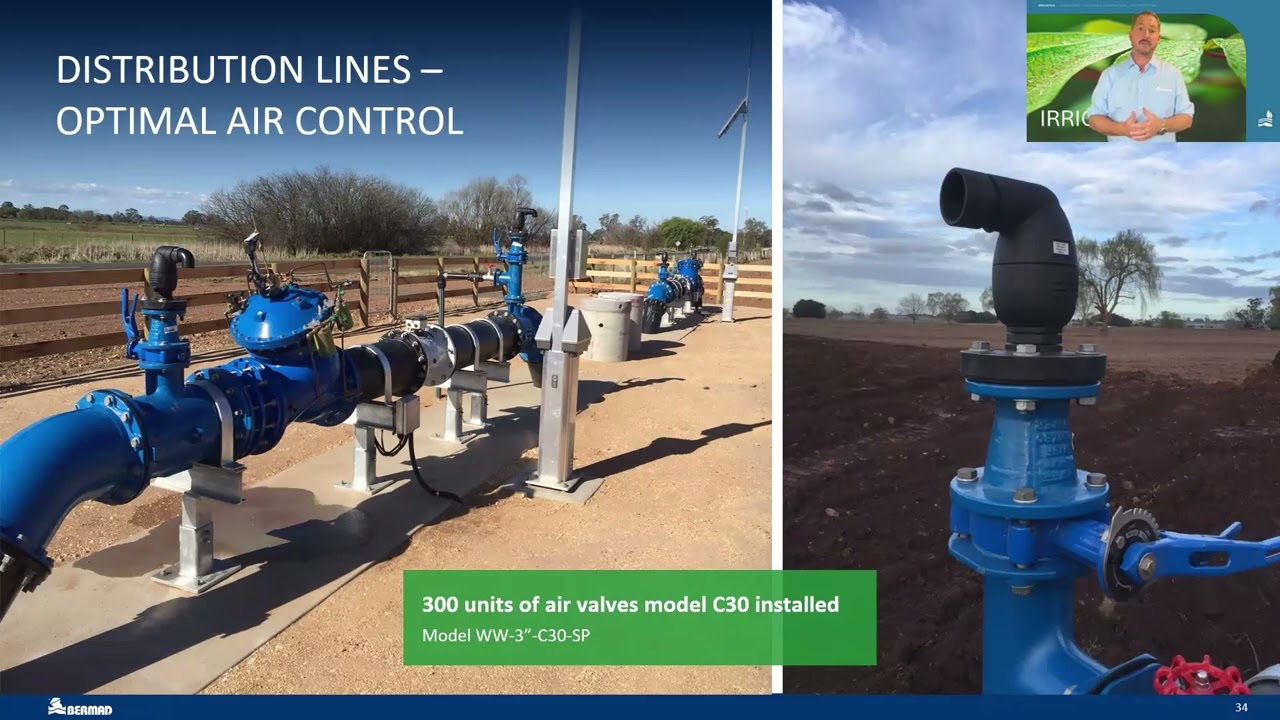
Large DN400 control valves for pipeline-to-channel regulation and downstream delivery
The upgraded distribution network delivers measurable improvements across operational, hydraulic and agricultural performance:
- The elimination of manual operation significantly improved efficiency.
- High-precision water delivery aligned with allocation requirements
- Improved grower experience, with reliable and automated access to water
- Reduced maintenance and manual intervention needs, supported by remote control operation with online system performance giving the ability to react to real-time events without visiting the site
- Future-ready infrastructure, designed for continued expansion and adaptation.
Want to explore how modern irrigation distribution networks are designed and operated in practice?
In our “Solutions for Distribution Networks in Irrigation Infrastructure Projects” webinar, we explore the engineering principles behind resilient water-delivery systems, covering pressure and flow regulation along distribution lines, advanced air control, and protection against hydraulic events such as water hammer and surges.
Using real project examples, including the Macalister Irrigation District, we demonstrate how combining precise hydraulic control with advanced connectivity and digital tools enables accurate flow metering, remote system management, and real-time response to network conditions.
Watch the webinar recording to gain practical insights into designing efficient, reliable, and future-ready irrigation distribution networks.

Main Benefits
The successful transition from a manually operated system to a fully controlled and automated irrigation distribution network, resulting in operational efficiency and reliable operation.

-
 Hydraulic Stability
 -
Precise Flow and Pressure Management
-
Remote monitoring and operation
-
Controlled Water Distribution
-
Surge and Water Hammer Protection
-
Improved System Efficiency
Products in Use
Explore our catalogue of advanced water control products, designed to meet real-world demands
and deliver lasting performance.



Got More Questions?
Related Case Studies
See how our solutions perform in real-world scenarios with in-depth case studies
and hands-on application success stories.