You missed the webinar and would like to learn more about advanced technologies for delivering irrigation water efficiently, take a look at the webinar recording here.
As energy costs and global food shortages continue to rise, governments and water associations focus on irrigation infrastructure projects that can deliver irrigation water with cost-efficiency. Irrigation water supply projects can broadly be divided into three key areas:
- Pumping Station and Water Source Management
- Water Distribution Network
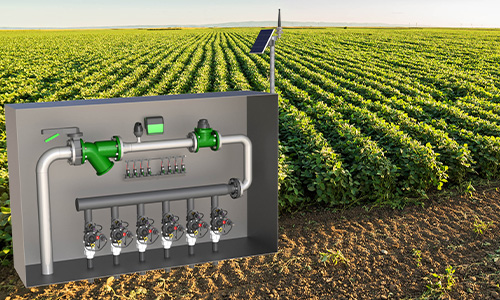
- Smart Hydrants – infield control heads
We recently held a fascinating webinar focused on meeting the demands of large-scale irrigation water supply projects. During the webinar, questions were raised, and we chose to share some of the interesting topics:
Pressure surge is likely to occur in hydraulic systems whenever a moving fluid is forced to stop or change velocity suddenly, and “suddenly” is the key word here—if it happens too quickly, that’s when a pressure surge begins to develop. The most common emergency scenario is a pump trip due to power failure. This mainly happens when pumps deliver water through uphill lines, also known as rising mains. To prevent damage caused by pressure surges, hydraulic system designers must consider and implement surge protection solutions. One possible solution involves releasing the excess energy in the network, created by the development of a pressure wave, back to the atmosphere using a hydraulic control valve—in this case, a Surge Anticipating Valve (SAV).
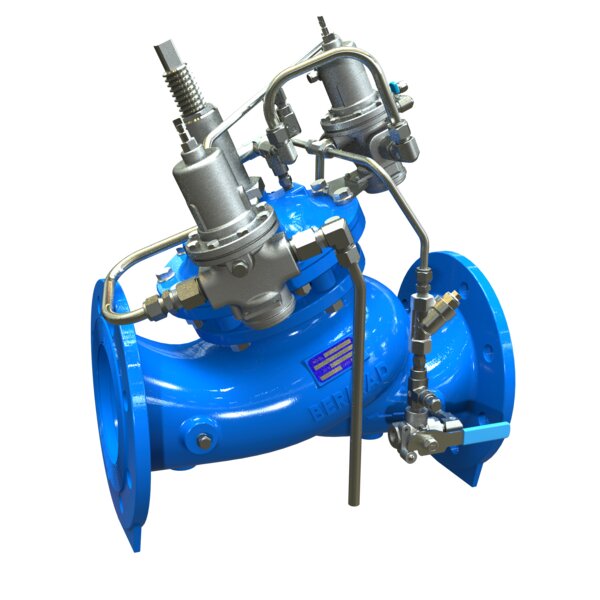
The Surge Anticipating Valve is an off-line (branched), hydraulically operated control valve. It is equipped with two pilots, a low-pressure pilot and a high-pressure pilot, which sense the main line pressure. The valve opens in response to the pressure drop associated with abrupt pump stoppage. The pre-opened valve dissipates the returning high-pressure wave, eliminating the surge. The valve smoothly closes drip-tight as quickly as the relief feature allows, preventing a closing surge. The valve can also relieve excessive system pressure. The surge anticipating valve treats only the positive surge, so a mandatory part of this solution is using Combination Air Valves that handle the negative surge by admitting air into the pipelines, preventing vacuum conditions and pipe collapse. The Combination Air Valves ensure controlled and safe air relief when the positive wave returns toward the pumping station.
There are several advantages to installing more than one Surge Anticipating Valve offline:
- One of the units can be used as a quick relief valve (QRV), relieving any excessive line pressure.
- Redundancy—allowing maintenance on one valve while the irrigation system is still operating properly
- Gradual opening of the valves during a surge event without enhancing the surge phenomenon
- Gradual closing of the valves after the surge dissipates, preventing secondary surge due to quick valve closure
- Reducing the size of valves to allow easier maintenance
<>
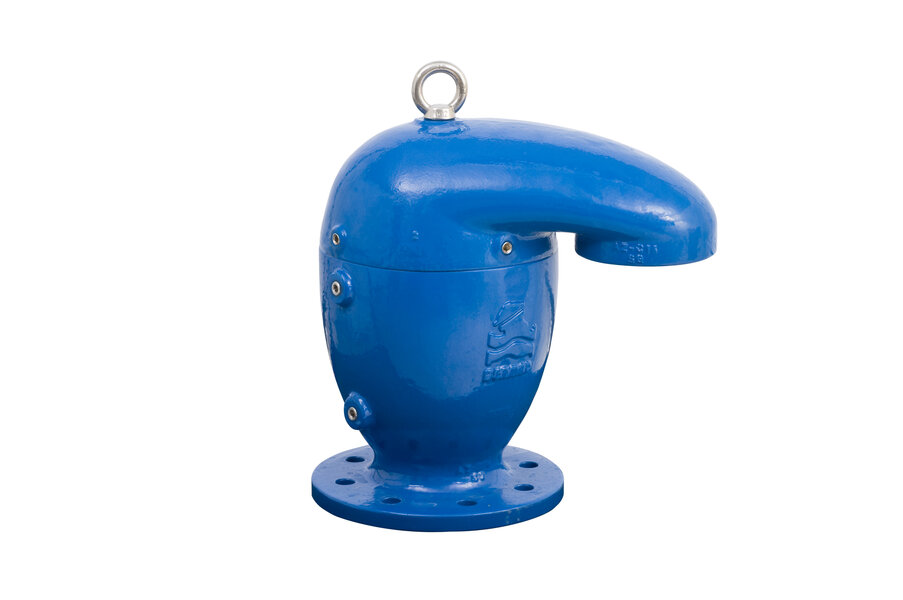
The presence of uncontrolled quantities of air in water systems can seriously affect their performance, causing inefficient filling and draining procedures and flow reduction, while increasing energy costs. It also disrupts the proper functioning of some system components, such as pumps, sensors, water meters, hydraulic control valves and more. On the other hand, air is essential in dealing with vacuum conditions and pressure surges. Air control in pressurized water systems is critical for increasing efficiency during filling, draining and pressurized operation, as well as to protect them from vacuum conditions and pressure surges. In the previous answer, we explained that Combination Air Valves deal with the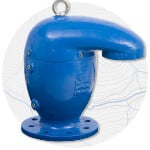 negative surge, by admitting air through the kinetic orifice into the pipelines preventing vacuum conditions and pipe collapse. This also applies to burst and drainage scenarios in which air valves admit air into the pipeline, preventing vacuum conditions. In scenarios of pipeline fill up the combination air valves allow to expel the air from the pipelines, through the kinetic orifice, ensuring efficient line fill-up. During pressurized operation, the Combination Air Valves ensure efficient operation by expelling air bubbles through the automatic orifice, preventing air pockets accumulation that can dramatically reduce the flow. Expelling air bubbles during pressurized operation is crucial for the proper operation of system components such as water meters. Therefore, it is highly recommended to install a combination air valve on the upstream of water meters to ensure reading accuracy and full pipe.
 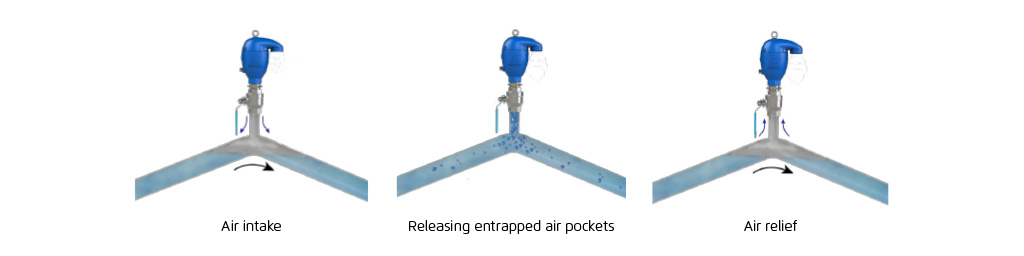 BERMAD recommends installing a surge protection feature (SP) for all air valves in the hydraulic system, especially on critical points like the pumping station. When the column of water and air approaches with high flow velocity (during surge or uncontrolled line fill up) it might push up the float quickly and violently, resulting in slam and secondary surge, damaging the air valve and the system components. The SP feature which is a disc with small holes prevents this slam, allowing controlled air relief without a secondary surge.
<>
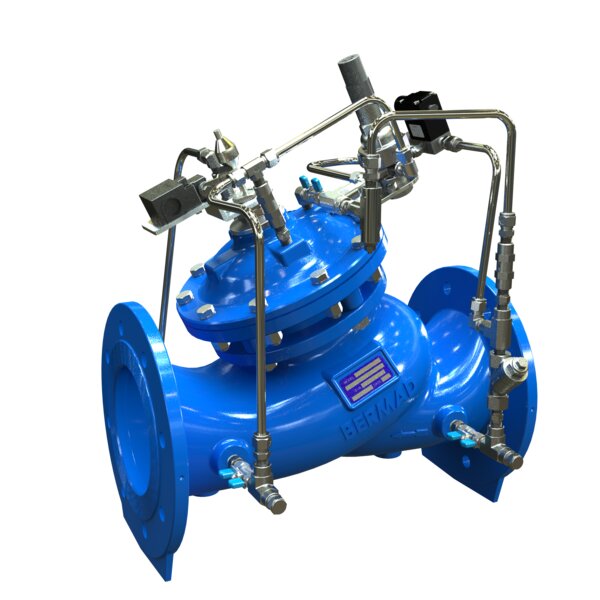
BERMAD Pump control valve, also known as an Active Check Valve, is a hydraulically operated control valve installed on the pump’s discharge line. It is a solenoid-operated valve that fully opens or shuts off in response to an electric signal, isolating the pump from the system during startup and shutdown. This prevents pipeline surges and protects the system from pressure shocks during daily operation. The pump control valve also serves as an excellent mechanical check valve, closing without surges before the water column changes direction, thereby protecting the pumps from reverse flow. Regulation features can be added to this valve. By adding a Pressure Sustaining feature, the valve maintains the minimum required pump discharge pressure while open, regardless of fluctuating flow, and prevents the pump from exceeding its designed flow or power consumption. The pressure-sustaining feature keeps the pump operating within the efficiency zone of the pump curve, protecting it from cavitation and damage, as well as electrical overload due to overconsumption scenarios (such as high flow and low pressure).
<>
 Yes, the Omega cloud-based irrigation controller supports fertilization programs, both based on time and volume.
<>
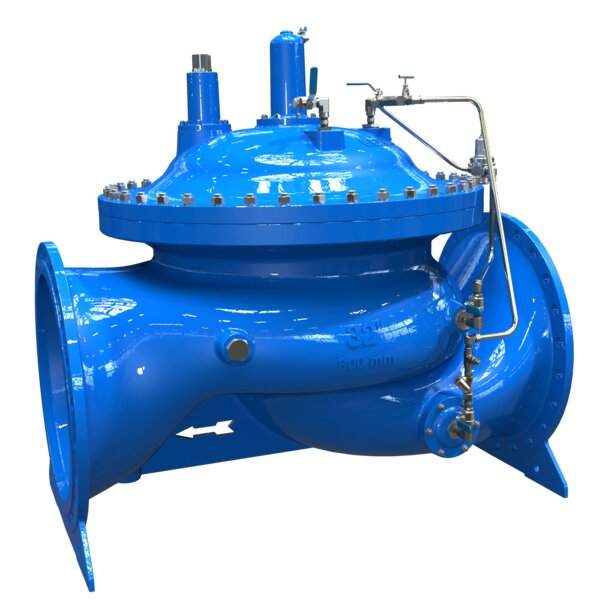
The BERMAD 700 Series Large Size Control Valves are hydraulically operated, diaphragm actuated type. Unique hydro-dynamic globe valve design with a special open plug provides high flow capabilities. The largest of these valves is 700-M5L 36 inch/DN900.
<>
At BERMAD, we strongly recommend and encourage you to contact us as early as possible during the project planning and design stages. This will ensure the ability to implement efficient, advanced, and intelligent solutions that can enhance system performance, extend lifespan, increase yield, reduce energy consumption, and address unique project requirements.
Find more data about BERMAD solutions and supporting design tools in the Irrigation Infrastructure brochure.