

Delta Controllers Improving Water Network Performance in a Growing Community


Developing a Future-Ready Water Network for a Growing Community
Located in Israel’s central district within the Gan Raveh Regional Council, Irus is a young, modern residential community established in 2013. It is home to around 1,135 residents in about 200 households, with plans to expand to 400–450 housing units. Although Irus is relatively new, it is part of a small regional council with long agricultural roots and a growing residential community. This creates a clear infrastructure requirement: systems that reliably serve current needs and support future development.
For a growing community, reliable water supply is an essential part of planning. The goal was to introduce smarter, dynamic water management from an early stage, evolving beyond reactive operation toward continuous visibility, pressure monitoring and informed decision-making. The network, however, presents clear hydraulic challenges, including elevation differences and variable upstream supply conditions that can affect pressure stability across the community.
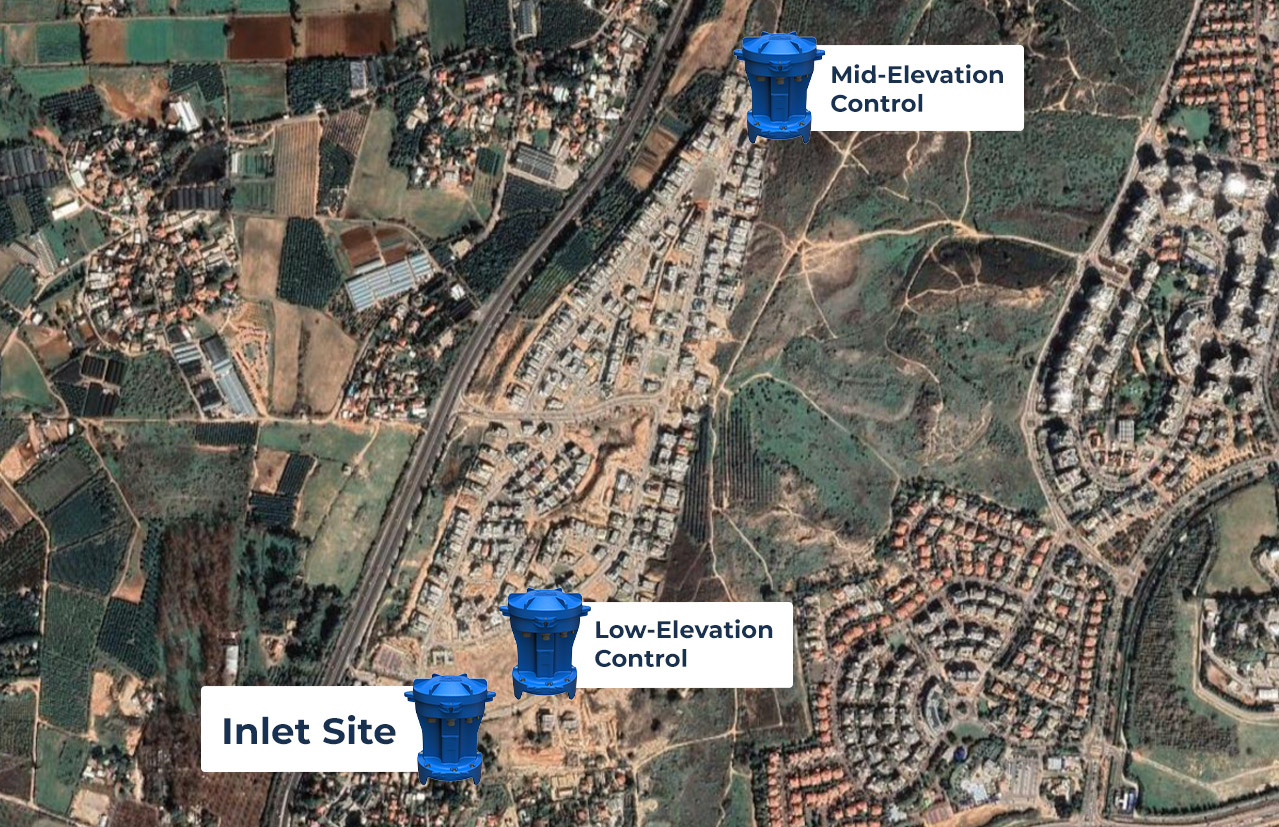
To manage these conditions, three Delta controllers were installed across the network as part of a holistic BERMAD solution, including precise electromagnetic flow meter and BERMAD hydraulic control valves at each point. Together, they form a coordinated system combining pressure management, monitoring, network protection and continuous operational data. This article explores how this integrated approach supports a more reliable, data-driven and future-ready water infrastructure for a growing community.
Managing Pressure Instability Caused by Elevation Variations
The water system operates across an elevation difference of around 30 meters, naturally creating higher pressure in the lower zones and reduced pressure at higher elevations. At the same time, upstream supply from the national water utility was variable, with recorded pressure ranging from about 100 mH₂O (10 bar) down to 55 mH₂O (5.5 bar).
This type of topography presents a challenge in water distribution networks, as the pressure required to reliably serve higher elevations can expose lower zones to excessive pressure.
The combination of these two factors created significant pressure instability throughout the network. Lower zones were exposed to pressure surges and pipe bursts, while consumers at higher elevations could experience insufficient pressure during peak demand. These conditions also increased leakage risk and maintenance requirements.
Beyond the physical impact on the network, there was an operational challenge: limited visibility into what was happening across the system. Without continuous pressure and flow data, it was difficult to distinguish problems originating within the local network from those caused by fluctuations in the national water supply.
The challenge was not only to regulate pressure, but also to create a more stable, transparent, and manageable network that could adapt to changing conditions and provide data to identify their source.
Dynamic Pressure Management Across Three Strategic Control Points
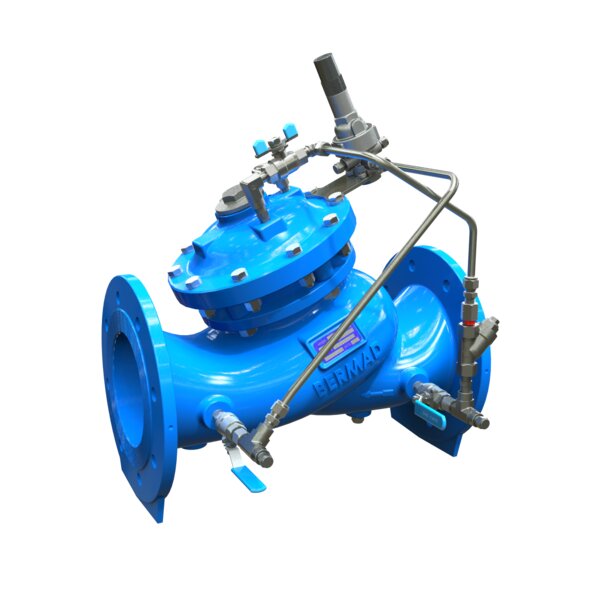
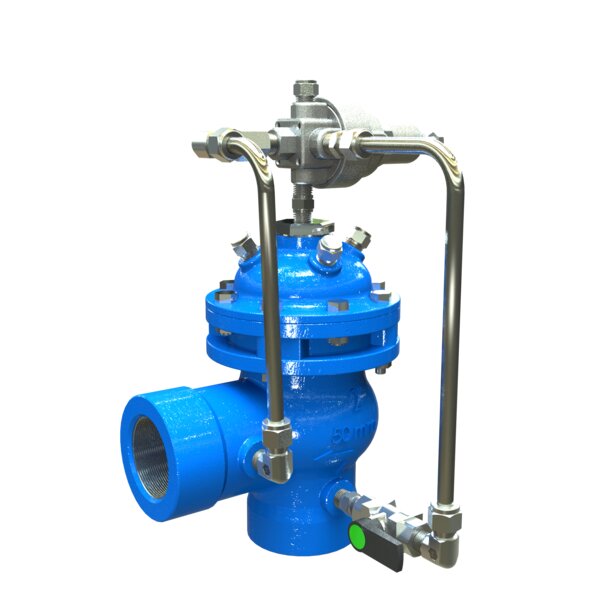
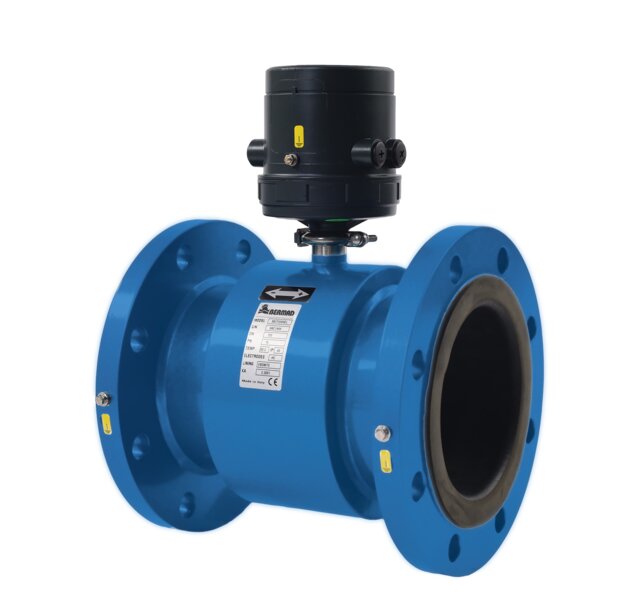
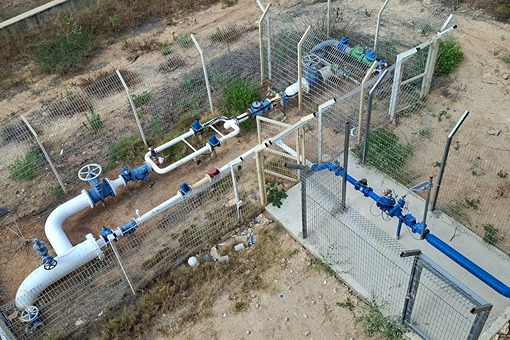
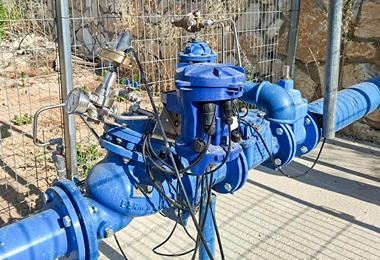
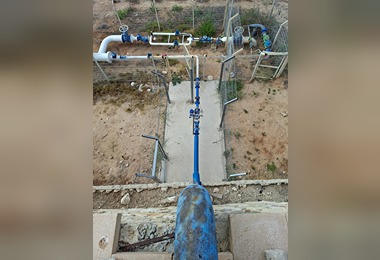
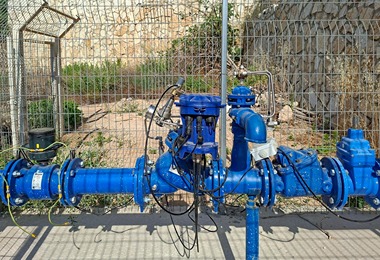
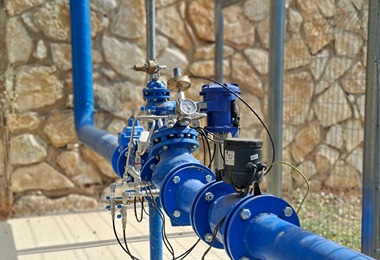
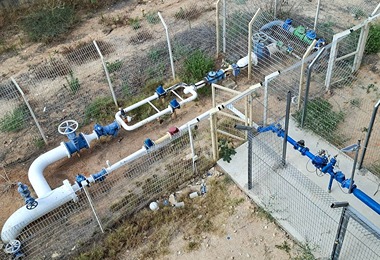
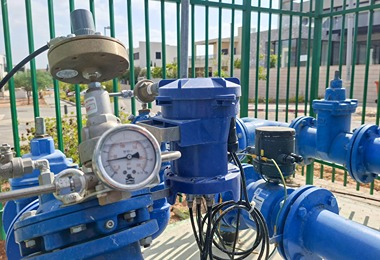
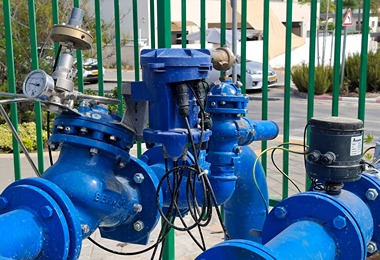
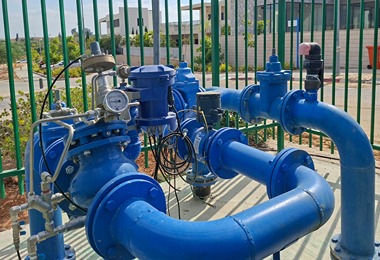
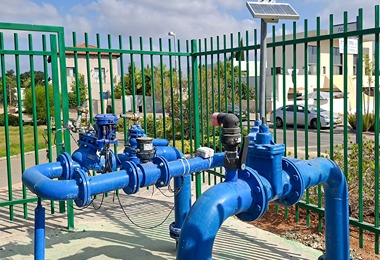
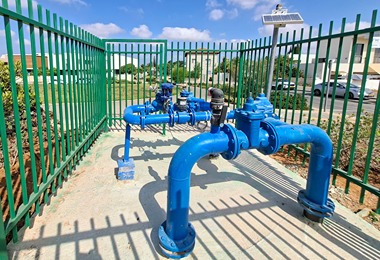
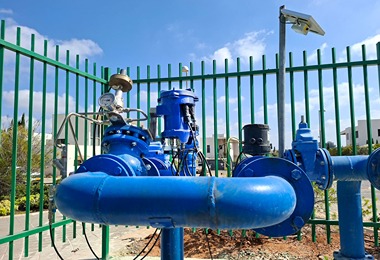
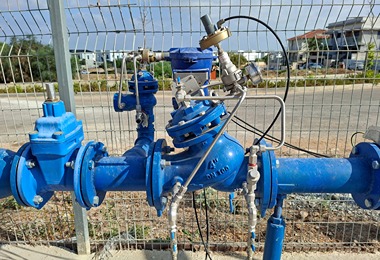
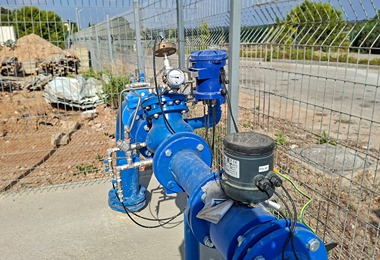
To address the network as a whole, BERMAD implemented an integrated pressure-management and monitoring solution across three strategic elevation zones. Each site combines a Delta controller with a BERMAD 720 Pressure Reducing Valve, a MUT2200 electromagnetic flow meter with an MC406 converter, and a Model 73Q quick pressure relief valve. Instead of operating as isolated installations, the three sites work together as one coordinated system, each addressing the hydraulic conditions of a different part of the network.
At the core of the pressure management solution is a traditional hydraulically actuated Pressure Reducing Valve (PRV), model 720 which automatically reduces a higher upstream pressure to a lower constant & manually adjustable downstream pressure regardless of upstream pressure fluctuations or changes in consumption.
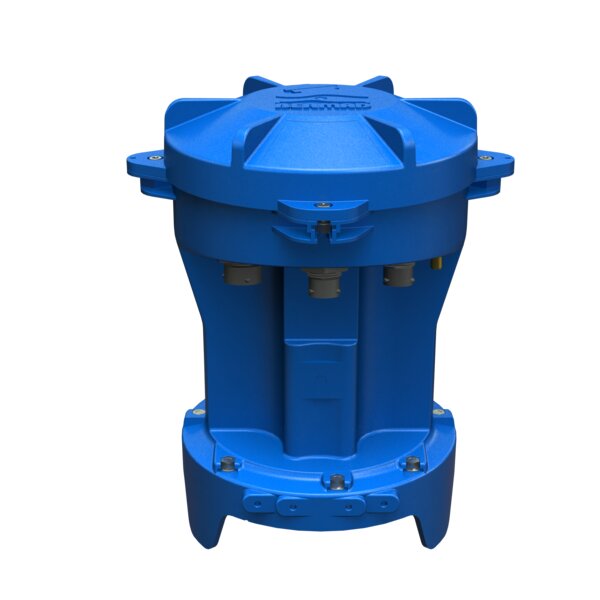
With the addition of the Delta controller the PRV is upgraded from a single downstream pressure valve to an integrated pressure management solution that can provide multiple different downstream pressures according to a programmable pressure regime. The pressure regime can be programmed according to time slots or by using a flow meter, according to different DMAs’ consumption or other possible parameters.
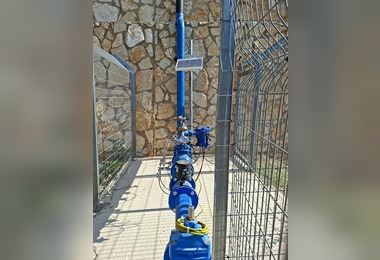
Since the actuation principle uses a small pilot bios chamber and two battery operated solenoids the controller does not require any external power source to operate and control the PRV. An external power source is only needed when continuous data transmission is required for online monitoring.
Delta Controller #1 – Inlet Site
The first Delta controller is installed at the community’s main water entry point. It provides primary pressure regulation, flow monitoring and downstream protection while continuously collecting system data to monitor changes in upstream supply conditions. This installation supplies water to upper elevation neighborhoods.
Delta Controller #2 – Mid-Elevation Control
The second installation is located at the northern end of the community, and provides the mid-level elevation neighborhoods with water. In peak hours the PRV allows higher pressure to the DMA and in low demand conditions reduces downstream pressure to the minimum required level.
Delta Controller #3 – Low-Elevation Protection
The third installation provides water to the lowest part of the community, where excessive pressure was common. The system reduces pressure to the required level, provides surge protection, and mitigates factors likely to cause leakage and pipe bursts.
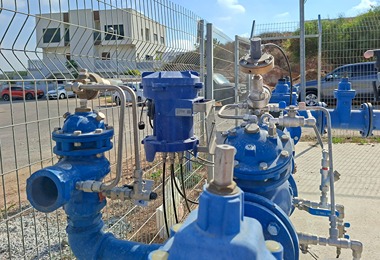
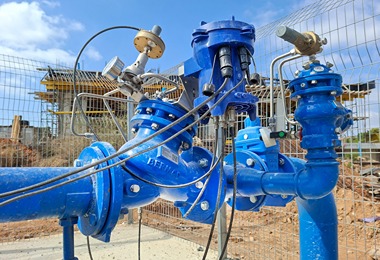
To provide a clearer picture of how the system operates in practice, the following operational data shows the actual pressure conditions across the three control points.
| Parameter | Delta Controller #1 Inlet Site |
Delta Controller #2 Mid-Elevation |
Delta Controller #3 Low-Elevation |
|---|---|---|---|
| Day SP [mH₂O] | 58 | 30 | 30 |
| Night SP [mH₂O] | 55 | 25 | 25 |
| Day SP Start Time | 05:00 | 05:00 | 05:00 |
| Night SP Start Time | 23:30 | 00:00 | 00:00 |
From Reactive Troubleshooting to Data-Based Management
A key strength of the solution is the continuous visibility it provides into pressure and flow patterns across the network. Instead of relying mainly on field incidents to indicate something went wrong, operators can now follow network conditions over time and identify patterns, pressure transients and unusual supply activity.
The collected data enabled the team to identify extreme upstream pressure fluctuations, detect surge events and correlate changes in supply conditions with failures observed in the network. This provided important evidence that some of the system problems were linked not only to conditions within Irus itself, but also to instability in the upstream water supply.
The combination of hydraulic control and continuous data therefore goes beyond pressure regulation alone. It gives operators a clearer understanding of how the network behaves, supports more informed operational decisions and provides objective data for discussions with the water utility when investigating the source of network problems.
Conclusion
This project exhibits the value of an integrated, comprehensive BERMAD solution. It brings together pressure control, flow measurement, surge protection and continuous data monitoring and collection of data that allows ongoing optimization of operation.
By combining distributed Delta controllers with BERMAD hydraulic control and measurement technologies, the network can move from conventional pressure regulation toward dynamic pressure management, continuously adapting to changing hydraulic conditions while providing operators with greater visibility and control.
This integrated approach helps stabilize the network, reduce operational risk, support long-term planning and lower municipal costs, while most importantly ensuring a reliable water supply for the community as it continues to grow.
Products in Use
Explore our catalog of advanced water control products, designed to meet real-world demands
and deliver lasting performance.