

Amélioration des performances des conduites de distribution CCRR SUCS pour répondre à la demande croissante d’irrigation
 Irrigation
 Adduction d’eau
 2026
2026 Espagne

Supplying Water to Productive Farmland
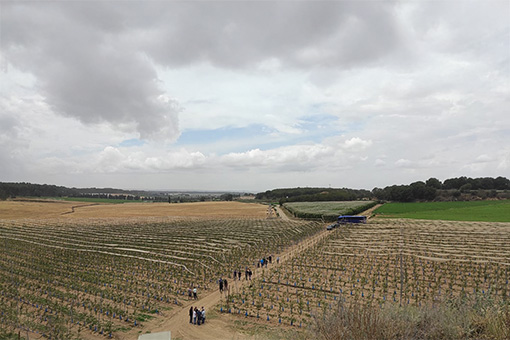
Lleida, Spain, is recognized for its agricultural productivity and innovative water management practices. The CCRR SUCS consortium oversees a gravity-fed irrigation system supplying water to 2,841 hectares of farmland. Of this, approx. 1,800 ha are irrigated using water from the Canal d’Aragó i Catalunya, with the irrigation network in this area incorporating BERMAD Hydraulic Solutions. The open canal extends 134 kilometers from the Pyrenees mountains, delivering water to several agricultural regions, including CCRR SUCS.
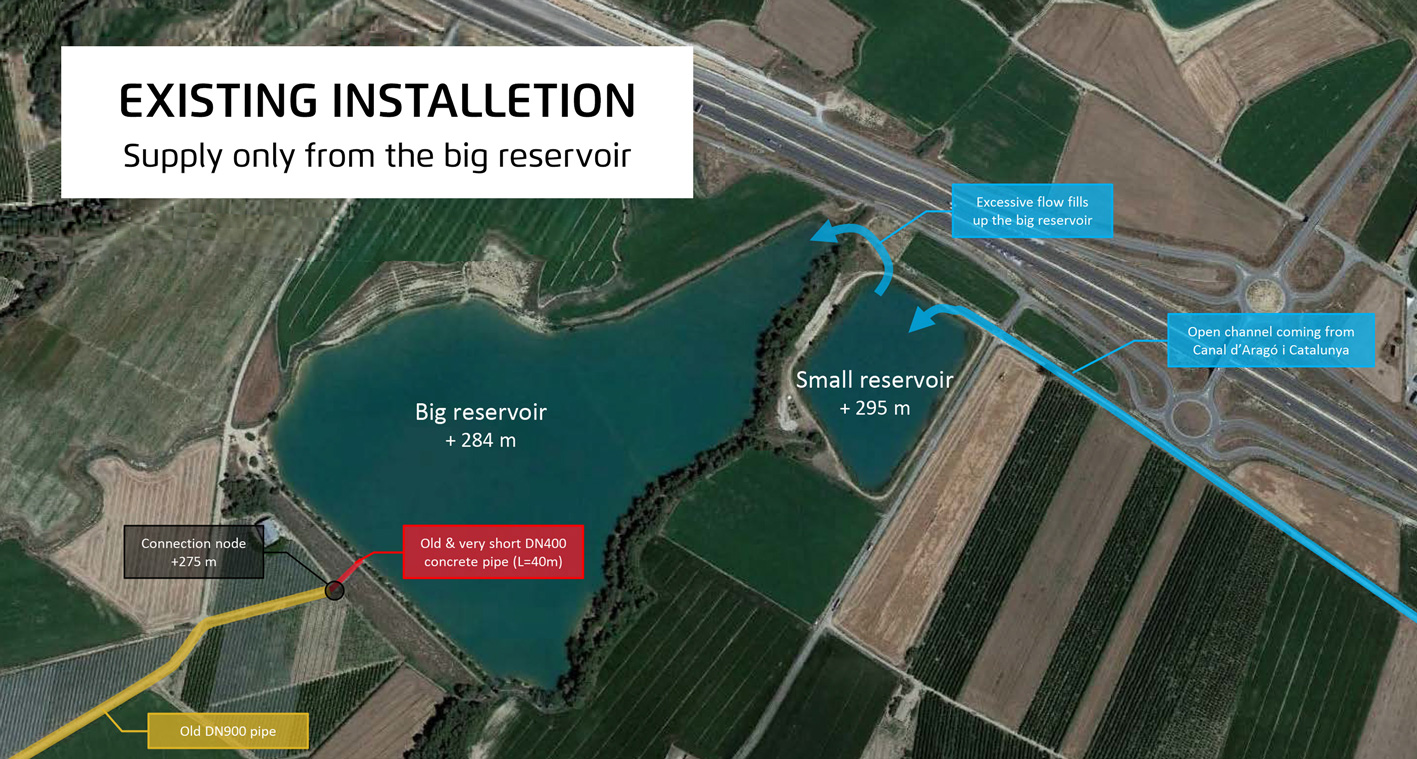
For many years, CCRR SUCS operated two reservoirs for water storage sourced from the canal: a large reservoir and a smaller one, both connected by gravity. These reservoirs functioned as a single system, with the larger, lower-elevation reservoir discharging water through a DN400 outlet pipe to the irrigation network. This configuration was effective until increased irrigation demand during peak seasons led to operational challenges and infrastructure constraints.
Overcoming Flow and Structural Limitations
- Limited flow capacity: The old infrastructure, particularly the DN400 concrete pipe originally designed for lower demand, restricted system flow to approx. 700 LPS (liters per second). As irrigation demand increased, this limitation became critical, as the consortium required higher flow rates during peak periods.
- Insufficient pressure: As system demand increasingly exceeded the recommended capacity of the DN400 pipeline, instances of inadequate irrigation pressure became more frequent, compromising irrigation efficiency.
- Structural risk: Excessive flow threatened the integrity of the larger reservoir’s walls. Replacing the old DN400 pipe with a larger one was not feasible, as it would require modifications to the reservoir wall, posing significant structural risks and potential stability issues.
- Aging infrastructure: The quality and reliability of the DN400 pipe have deteriorated over time due to sustained high flow velocity.
Replacing the DN400 pipe with a larger alternative was not feasible, as it would necessitate modifications to the reservoir wall and introduce significant structural risks. Consequently, alternative solutions were explored.
Hydraulic Upgrade Without Structural Modifications
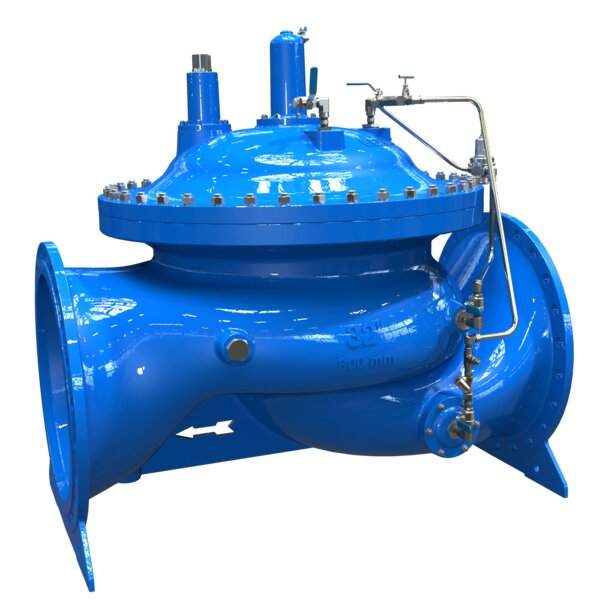
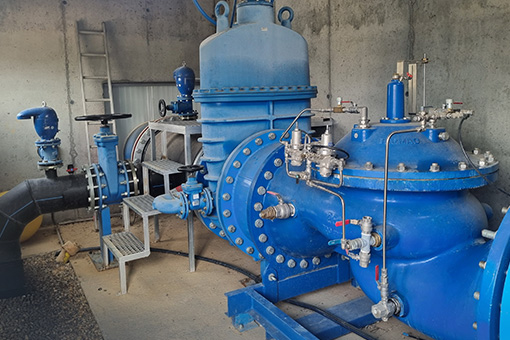
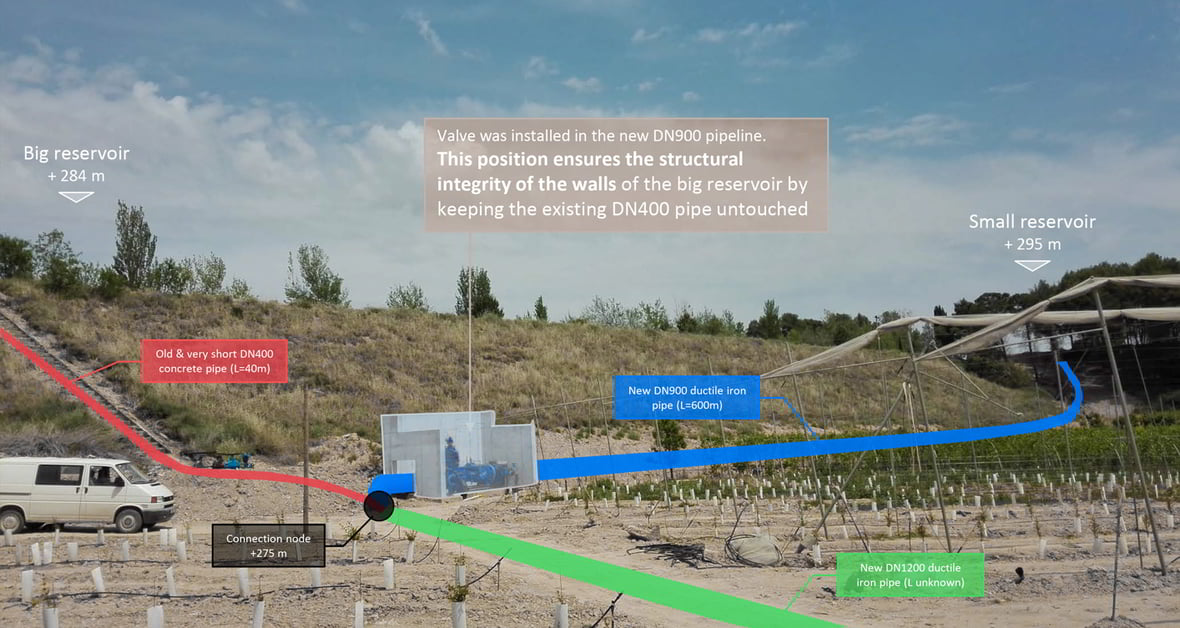
The goal was to enhance system performance without altering the DN400 pipeline or compromising the large reservoir’s structural integrity. A new DN900 pipeline was installed to connect the small reservoir to the DN400 pipeline. The BERMAD flow control hydraulic valve was installed at the connection point of both old and new pipes. The main objective was to double the system’s maximum flow capacity to about 1,500 LPS while maintaining safe and efficient operating conditions for the existing infrastructure.
Prioritizing water intake from the large reservoir, which contains the majority of available water, was essential. Without intervention, the gravity-fed system would naturally favor the smaller reservoir located at a higher elevation. To address this, the project aimed to limit the flow through the DN400 pipe to approximately 400 LPS, a rate deemed safe for the infrastructure. Any additional demand above this threshold was planned to be supplied via the new DN900 pipeline from the small reservoir. This approach prompted the evaluation of several solutions to achieve optimal flow control, protect infrastructure, and enhance operational efficiency.
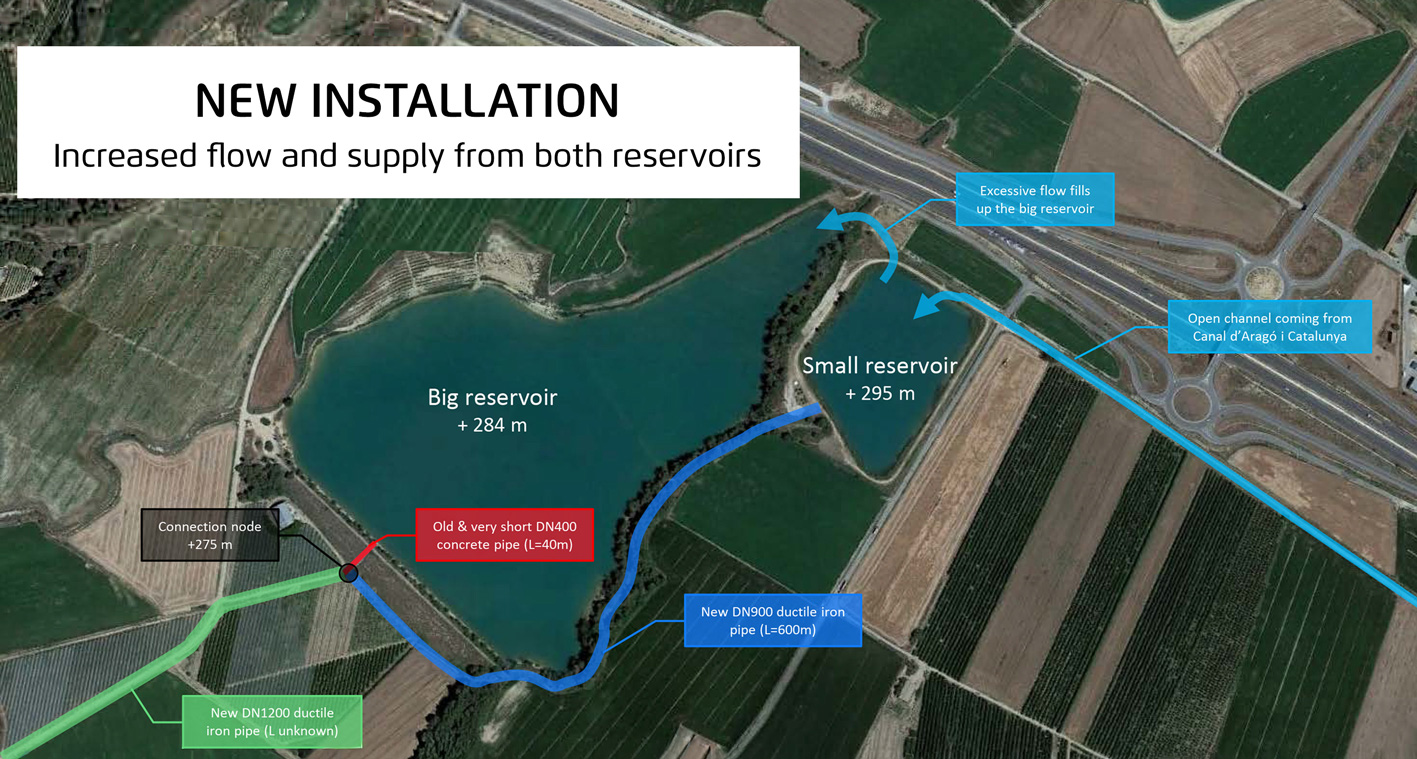
Flow Control Prioritization in a Dual Source Distribution Network
One proposed solution involved electronic flow control valves, which provide high precision and dynamic adjustment to real-time demand when integrated with smart flow meters. However, due to budget constraints, unreliable power supply at the site, and other local requirements, the customer preferred an alternative approach.
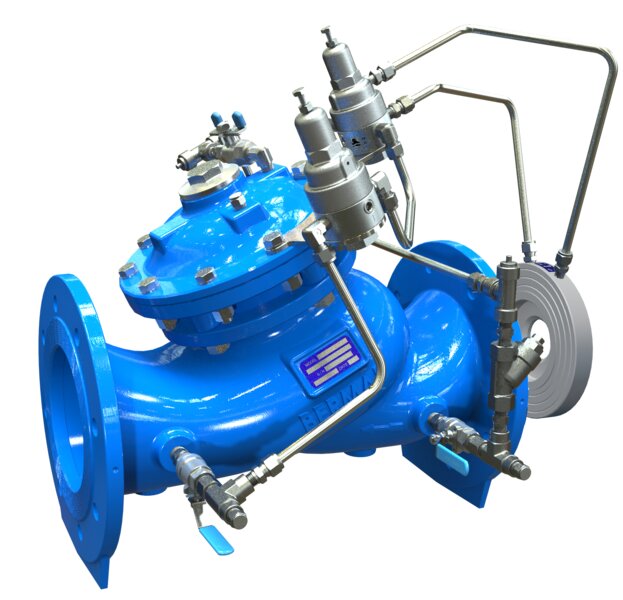
The selected solution was a fully hydraulic, cost-effective, bi-directional 28″ Flow Control and Pressure Reducing Valve model M5–772 equipped with a differential pilot and upstream orifice assembly. This valve was installed on the new DN900 pipeline and operates by sensing differential pressure across the DN400 pipe. When the flow through the DN400 remains below the threshold of 400 LPS, this flow control valve remains closed, prioritizing delivery from the large reservoir. As demand exceeds the 400 LPS threshold, the differential pilot detects increased pressure loss across the orifice assembly and gradually opens the valve, supplementing flow from the small reservoir while maintaining the DN400 contribution at about 400 LPS.
The pressure reducing feature ensuring continued supply if the DN400 is unable to deliver the 400 LPS, for example, due to blockage or maintenance. In such cases, the flow control pilot won’t be able to sense the pressure loss across the orifice and will not open the valve. In such cases, the pressure reducing pilot « joins » the game, opens the valve to allow flow as long as the downstream pressure is below the pilot setting. Meaning that in such specific critical scenarios, the entire capacity will be supplied by the small reservoir. This configuration provides a safe, autonomous, and highly efficient balance between both reservoirs while ensuring a reliable water supply and protecting the existing infrastructure.
Proven Long-Term Performance and Operational Reliability
- The system has been operating successfully for several years with stable and efficient performance and reliable flow control
- Flow capacity was effectively doubled while preserving the structural integrity and reliability of the reservoirs and pipelines
- The system automatically adjusts to demand, ensuring efficient and safe operation
- The CCRR SUCS technician can easily adjust the valve when needed and fully understands its operation, which has been essential for maintaining long-term performance and simplifying ongoing management.